

“More”, Pulp’s first album in 24 years, was never supposed to be. Frontman and founder Jarvis Cocker had spent most of that quarter of a century convinced he never wanted to make another record. Trying to finish 1998’s “This is Hardcore” had been “torture” for him – he felt it was the beginning of the end for Pulp. The band released their last album “I Love Life” to mixed reviews in 2001, then pretty much called it a day. They’ve reformed twice in the intervening years, in 2011 and 2023, for a run of acclaimed live shows. But they always resisted releasing anything new.
You can understand their reluctance. Even the most ardent of Oasis fans probably felt relief, that no new music will accompany their behemoth reunion tour this summer. It becomes tricky when you’re in your 50s, or 60s in Pulp’s case. How do you create songs that still sound fresh, when you’ve lived through and sung about all of rock’s classic themes – the highs and lows of sex and love, the lure and scourge of drugs – and experience has shown you that political songs rarely change politics? What is left to explore? And how do you build on a catalogue as singular and beloved as Pulp’s run of hits in the mid-90s like “Common People” and “Disco 2000”, huge songs about kitchen-sink dramas that still sound as vital today, perhaps even more so? How do you embrace the future, instead of just celebrating the past?
Never Being Quite Enough, Never Getting The Girl
But what Pulp had never truly explored was feelings. Their currency was ideas and concepts, narrators rather than protagonists. Despite being ranked among the “Big Four” of the 90s UK Britpop scene, they were always outsiders. Pulp were older than Blur, Oasis and Suede for a start. They formed as teens in 1978, but Cocker was 31 before Pulp finally found fame with their fourth album, 1994’s Mercury Prize-nominated “His ‘n’ Hers”. They were born out of 80s pop and post punk rather than classic rock ‘n’ roll, described as Abba meets The Fall. In their music, Pulp cast themselves as the wry, cigarette-smoking observers in the corner of the party, always too busy thinking to be truly in the moment. “Is this the way they say the future’s meant to feel,” Cocker famously mused in the opening lines of 1995’s meditation on rave culture “Sorted for E’s & Wizz”. “Or just twenty thousand people standing in a field?”
Pulp’s biggest songs masked the rejection of never quite being enough, never getting the girl, with a clever line, a raised eyebrow and a pointy dance move. They were political too – “Common People” remains pop’s most searing take-down of class tourism – and they walked the talk. Cocker was famously arrested for protesting Michael Jackson at the 1995 Brit Awards ceremony by invading the stage and mooning during his performance, the whole thing broadcast live on TV. Pulp were brave, outspoken and uncompromising. They influenced acts as diverse as Franz Ferdinand, Yard Act and The 1975 with their intelligent pop that made you want to dance but also think. Cocker just avoided getting too close to his own feelings in the process.
All that started to change in 2019, when Cocker found himself at a crossroads in life. His long-term relationship was ending and he remembers feeling adrift, wondering what the hell he was doing. He started to confront feelings he’d long avoided. Some of this found its way into “The Hymn of the North”, a song included on “More” and live debuted at their homecoming show in 2023, but originally composed for a Simon Stephens play. The orchestral song addresses Cocker’s teenage son, giving advice for the future. It was the beginning of “More”. The death of Pulp’s bassist Steve Mackey in 2023 and Cocker’s mother the following year finally made him realise, there was new music to be made. “You realise that you yourself are still alive,” he says. “And that you still have the possibility of creating”.
Sincerity, Connection, Love and Being in The Moment
This time, they approached the process differently. With James Ford, producer of Arctic Monkeys and Fontaines D.C. to name just a few, at the helm, they recorded the album in just three weeks. And it didn’t feel like torture. “More” is a profoundly hopeful album about the passage of time, maturing and coming to understand your place in it all. It’s all so different from the bleak message of “Help the Aged”, the track the band wrote while still in their mid-thirties, about ageing being “such a lonely place”. But then, maturity shifts perspective. “More” has no time for the cynicism, moodiness and unrequited longings that often characterise art by young people. By mid-life, we’ve learned the everyday can be depressing enough and time can slip through your fingers if you let it. “More” is about sincerity, connection, love, and most importantly being in the moment.
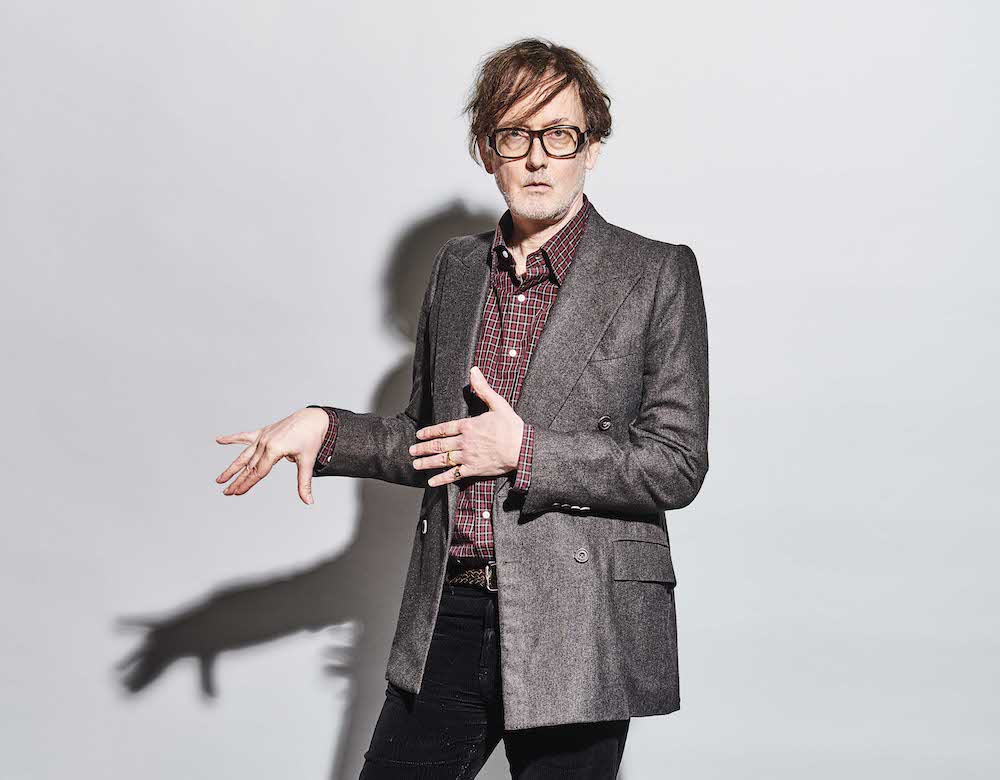
Lead single “Spike Island” sets out Pulp’s stall for 2025, swirling synth pop that urges the listener to “come alive”, fuelled by the conviction that “it’s time I’ll get it right”. It’s an immediate indication that the band have lost none of their power to write a song that grabs you by the throat and leads you to the dancefloor. They haven’t lost their trademark humour either. Cocker can’t resist sending himself up here with the line “I exist to do this/Shouting and pointing”, but overall the message is deeper, the humour affectionate rather than biting.
Second single “Got to Have Love” embodies the album’s manifesto, the more sincere, uplifting child of classic track “Disco 2000”, with Cocker urging you and probably himself to stop hiding from emotional connection. There are other cautionary tales about letting the light go out on life. “Background Noise” juxtaposes Ronettes-style bass and tambourine with the quietly devastating. “How could I know/That love turns into background noise/You only notice when it disappears,” Cocker muses. “Grown Ups” is a stomping, guitar-led warning not to let your life sink into mundane routine and stultifying conversations down the pub about your daily commute. “I am not ageing,” Cocker sings defiantly. “No, I am just ripening.”
Farmers‘ Markets, Commuter Trains, Quiet Pubs and Charity Shops
Indeed. On “More”, Pulp are unafraid to slow things down too. And it’s amongst the quieter moments that the album really comes into full bloom. It’s not an overstatement to say “Farmers Market”, with its layered, understated piano-and-orchestra arrangement, could be the most beautiful song about finding love in middle age you’re ever likely to hear. On “More” these are the backdrops: farmers’ markets, commuter trains, quiet pubs and charity shops that smell of digestive biscuits. 90s-era Cocker would have skewered the middle-classness of all this with a smart lyric. But now he’s more concerned with earnestness and finding connection. “You smiled and I could see that life had got to you too,” he observes. “Ain’t it time you started feeling?”
Elsewhere the lush, strings-led “Partial Eclipse” and “Sunset” meditate on nature and big, existential questions about our relationship to the physical world around us. Cocker says they’re about respect for the planet and about finally feeling at ease in nature and the insignificance of the everyday in the face of it all. Thirty years later, Cocker seems to have arrived at a place where he can just be in the field, in the moment, not overthinking but feeling. It’s quite beautiful really. And it makes you incredibly grateful that the band realised after all this time, that they had more to give us.