
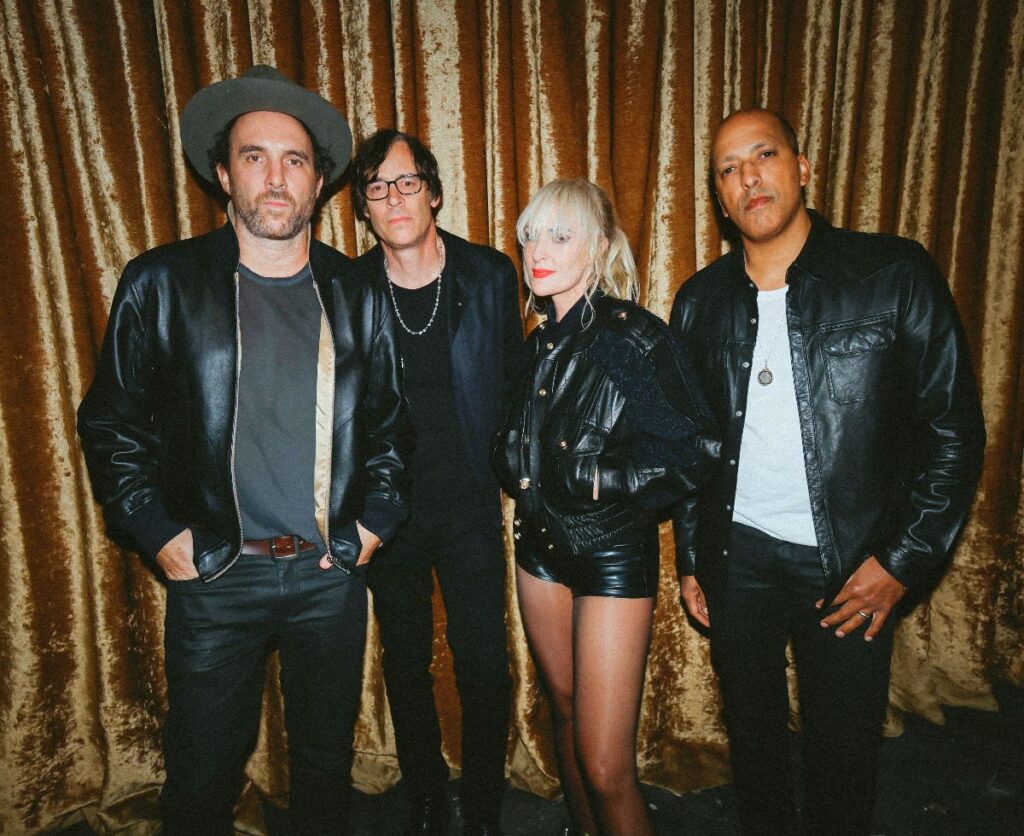
„Romanticize the Dive“ is the tenth album by the Canadian indie rock band Metric. Singer Emily Haines and guitarist and producer Jimmy Shaw are approaching 25 years of working together and nearly 30 years of friendship. That is indeed something you can be proud of and unapologetically romanticize.
On one of the first warm days in Berlin, we sit together in a hotel lobby. Emily and Jimmy are bursting with ideas and drive. Emily has just spontaneously ordered a huge bouquet of red roses for her acoustic showcase at Rough Trade Berlin later that evening. We talk a lot about this remarkable energy they’ve sustained for so many years: beyond doubt, in spite of getting older, and without succumbing to the obsession with self-optimization that often comes with it.
We also talk about their connection with their fans. And that connection becomes especially clear again later that evening at the showcase. People of all ages and identities passionately sing along to their favorite Metric songs. The way Emily and Jimmy dive into their lives truly deserves to be romanticized.
The last time I saw you, you had started a party in the parking lot, after your show. You Emily, were carrying a boom box in one and a glass of wine in the other hand.
Jimmy: I’ve seen this visual.
Emily: I have this little speaker that’s got a strap like a purse. Yeah!
Jimmy: This is a familiar vision.
Emily: It’s something we like to do. We did this on our tour with Noel Gallagher and with Garbage. We were opening, and after the show we set up tents, we brought tables, barbecue, a bar… we made a whole set up (laughs). We try to make people happy. It’s cool that we have this shared memory.
Before that I had interviewed you, Emily, about your album „Art of Doubt“. We talked a lot about doubt back then. I remember your said that you always like to approach the doubt full on.
Emily: To go toward it. Yeah.
And you know what I thought when I heard this album? It sounds a bit like you moved past the doubt.
Jimmy: That’s very cool! I would agree with that. I don’t know if I ever thought of it like that, but there isn’t a lot of doubt in that record.
Emily: No, that’s true.
Musically it sounds very fresh, very playful and poppy. But the lyrics are very grown up. The no bullshit attitude of that record resonates a lot with me.
Emily: (laughs) We were talking about this the other day. We do all this work. The writing is also inner work. Always trying to go toward the doubt and feel where you’re being dishonest with yourself. Or you’re being fearful. Or you’re hiding. Or you’re lacking self awareness or whatever it is. It occurred to me recently: oh wait, maybe it’s actually working. So maybe that’s what you’re feeling. It’s very encouraging to hear that, thank you. I think I’m just so in the mindset that you always have to be going toward that. And maybe you do evolve. Maybe we can. And maybe we have. That would be great (laughs).
Jimmy: I would like to think that. When we made „Art of Doubt“ eight years ago, I don’t think necessarily that it was about that we were feeling a lot of doubt. I don’t think the confidence level is that different. But I think there’s definitely eight years of life and experience that have happened since then. I think this vision was quite pure from the beginning, what we wanted to make the record be about. If not in terms of its content and its lyrical themes, but what it was going to mean to us to make it. What we wanted to do with it. I think that we kind of had this feeling that in some ways, make it like it’s your last one. I don’t know if it will be, I don’t think so. But make it as though it is. I think that’s why it’s not necessarily the return to the essence of our sound but the true owning of the essence of our sound. That was something we felt was very important to get.
And it’s your tenth record! How did you do that?
Jimmy: We don’t stop. But it’s also not manic.
Emily: No. It’s just, the path is, we’re on it. And the pace sometimes fluctuates. Sometimes there are side meanders. But it’s always feeding back into this forward momentum with the four of us.
It does seem like you always keep going. You’re constantly moving forward, but at ease, not with clenched teeth. And you do have a following all over the world, which is something you have worked for. It cannot be taken for granted in the business these days.
Emily: I think it’s a real connection. That’s the thing that we notice all over the world. We’re not doing ten arena shows. But we get to play really great venues and the people that are there, they know why they are there. There aren’t a lot of casual listeners. Even younger people who are finding us, which is great, I look at them and think, that’s good. Even them, it seems like they have something deeper that they are getting from us. It’s not this fashionable thing. We might actually be unfashionable (laughs).
You recorded this album in New York, with a sense of going back to your roots. Tell me what was the spark that set off this journey?
Jimmy: I’m bringing this back about two years now. To April 2024. Emily had written some music, I had written some music. We wanted to see what it would feel like to go back to Electric Lady for the first time in a long time. I don’t think we really worked there since „Synthetica“, so almost 15 years. There was some litte spark that happened by us being in New York and in that studio, staying in the same hotel that we used to stay at in 2006. There was some sort of return in the stars for us. And then when we started making the record, there was a vision to put together the same people that helped us make „Fantasies“ and „Synthetica“, which are the ones we primarily did at Electric Lady. So we hired Gavin Brown and John O’Mahony, and we made a concerted effort that wen we were looking for answers in the music, when a song wasn’t working or we needed inspiration or some sort of direction, we would only listen to our own records. And I think that was the first time we’ve ever really done that. We wanted to just go back and only reference ourselves. Because part of the storyline for us was about owning our place in the early arts and music world and everything that had happened in the last twenty something years. Revisiting the process how we did it back in those days was interesting and it yielded a very specific result. If we’d done it differently and hired different people, it would be a very different record, no question.
Emily: Things can be turned into so many ways. For us, we have to make a plan and have a vision, what should we execute on this one. There have to be parameters. I think it is good that we chose this time to make this the essence.
That sounds like quite a tough endeavor, to dive so deeply into your own back catalogue.
Emily: I’m glad you picked up on the other meaning of dive! (laughs)
Speaking about romanticizing: it’s not a nostalgic record though. Which I like about it. Sonically I feel like it’s going back to your roots, but overall it’s very fresh and forward. The problem with nostalgia is, it can become a backward movement that isn’t getting you anywhere.
Emily: I love that you see that distinction between those two words too. Strictly speaking, to be nostalgic about something, you would have to have been there. So it eliminates a whole bunch of people. Nostalgia makes it limited to our age group or people who were around at that time. But romanticizing is open to everyone. I like the idea of people who are trying to figure out how to be in the world right now, in their twenties or whatever… I think it’s a good thing to romanticize. It’s not bullshit. You should romanticize it, we should too. It was hard. There wasn’t money. There wasn’t a million phones. There wasn’t all of this stuff that is maybe working as tools for people or maybe isn’t. But what drove us was: we’re going to make this life. As artists, with our friends. There’s a whole ethical through line. And it’s fun! I’m happy about the idea of younger people romanticizing it. It’s not fake.
As you mentioned friendship and the ethical aspect of it: I love the idea of you going on a joint tour in the fall together with your friends from Stars and Broken Social Scene. I feel there is a very organic and honest feeling of friendship that connects all of you as artists.
Jimmy: To me, when you make a record, the statement of the record is in the record itself. When you tour, the statement is often „let’s promote that statement“: But this tour is a statement in itself. Combined between all of us there’s like a thousand years of friendship.
Emily: Rough math (laughs).
Jimmy: It’s really cool! 25 people knowing each other for 20 something years, that’s a lot of fucking years of friendship. I think it’s going to have a really solid impact. As important as it is to watch a band play really, really well, I think we’ve all seen that a lot. It is exciting for us to bring another element to a show.
I mentioned the „no bullshit“ attitude before that I sense on this album. Do you feel that with increasing age, that you have less time for bullshit?
Emily: I mean, I’m trying. That’s what I’m trying to manifest. I’m saying that I don’t give a fuck… but in the right way. There’s no chance of me losing my empathy any time soon. It’s not about not caring about other people. It’s the vanity and the endless self-scrutiny… Is this it? I get this amazing life and I’m just gonna spend the whole time agonizing over my appearance and my flaws? That’s it? That will be my life and then I get to the other side? Hell no. That’s the idea.
You have known each other and have been working together for such a long time…
Emily: The four of us have been together for 24 years and we met in 1998.
Jimmy: Yeah. We’re almost at 30.
Is there anything knew you have learned about each other and -and Metric- while making this record?
Jimmy: I just think its admirable that we both decided to make it the best thing we possibly could. And we just never settled. John, who we asked to mix and who did all of our early records, said: „I haven’t worked with you guys in ten years. If I come back, we’re going to go all the way. There’s no stone left unturned.“ It’s not just me and Emily. This, coming from the mixing engineer… he was forcing us to re-record stuff.
Emily: We were just not accepting anything except the best that we could do.
But that requires to leave your ego aside, doesn’t it?
Emily: Yes, definitely.
Jimmy: That really is the thing I think I was getting at. We both just left the egos aside. To be able to do that after such a long time is really cool. It keeps the thing going. It’s hard to do something good. It’s really hard. But as long as you don’t worry about it… just keep going!
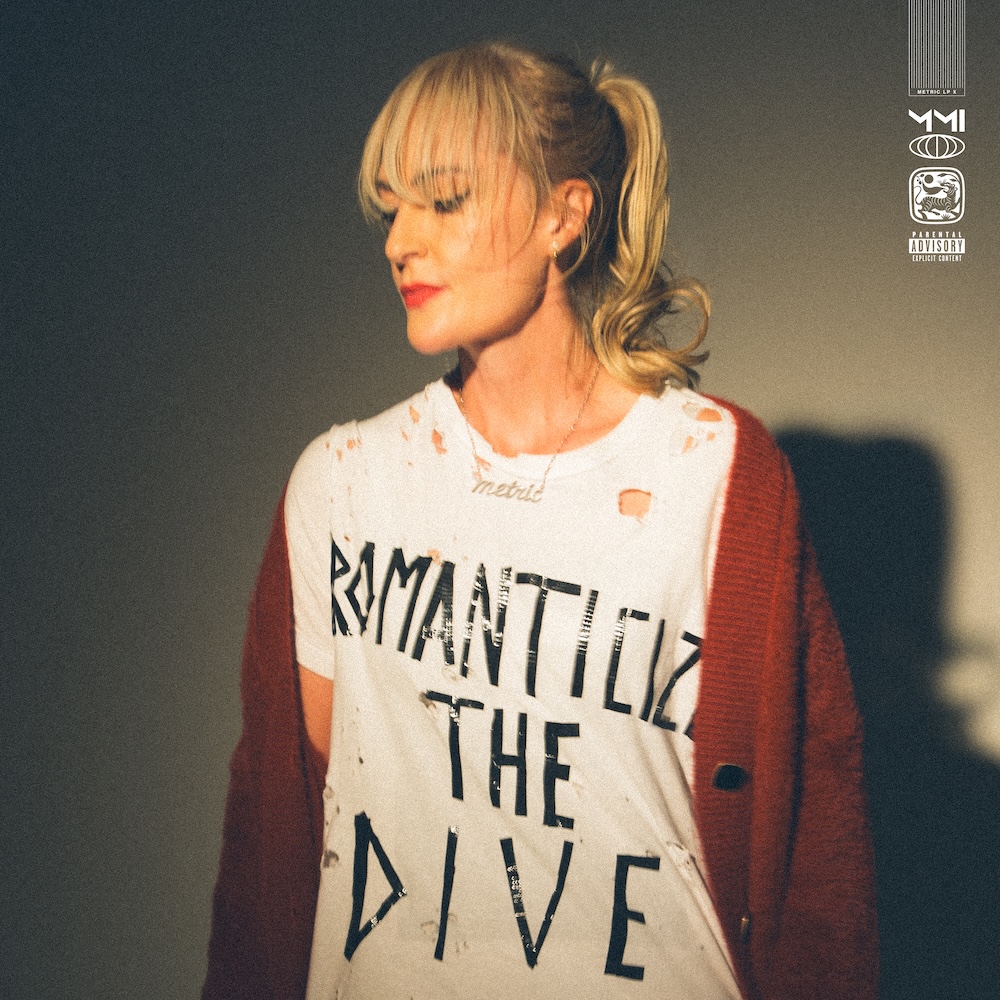
The new Metric album „Romanticize the Dive“ is out now.